

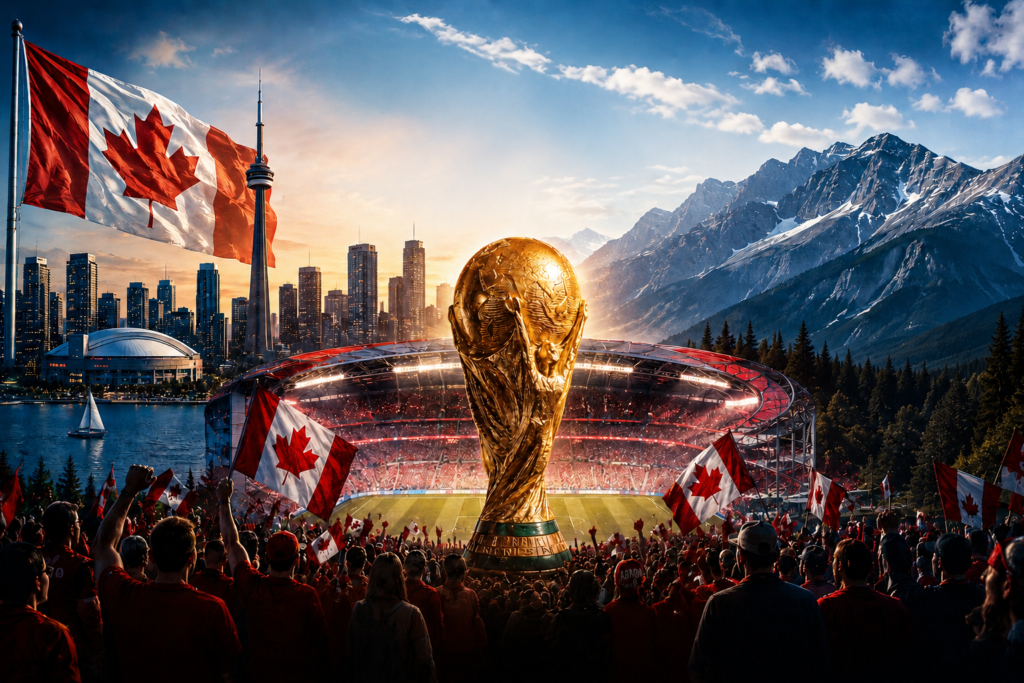
The 2026 FIFA World Cup is shaping up to be one of the most significant global moments in modern Canadian history. For the first time ever, Canada will not just be watching the World Cup from the sidelines. It will be one of the nations hosting it, alongside its neighbours, the United States and Mexico. With the arrival of this Grand Tournament on Canadian soil, cities like Toronto and Vancouver have now been transformed into one of the biggest stages in world sport.
But beyond the stadium lights and match schedules, the real question is…What will the World Cup actually do for Canada?
All Eyes on Canada
At its core, the World Cup is a storytelling machine. Every match broadcast reaches millions, sometimes billions, of viewers around the world. For Canada, that means a rare opportunity to be seen not just as a country on a map, but as a living, breathing culture with cities, people, and identity.
Toronto, in particular, will be one of the focal points. As one of the host cities, it will welcome international fans, media crews, athletes, and tourism dollars in a way that few events in Canadian history have ever matched. According to Ontario’s official World Cup planning updates, the province expects significant economic activity tied to tourism, hospitality, and infrastructure spending in preparation for the tournament.
But the deeper impact may not be economic alone.
For many visitors, this will be their first time experiencing Canada beyond stereotypes or headlines. The culture of Canadian cities, the diversity of communities, and the everyday rhythm of life here will all be part of what gets broadcast to the world.
In that sense, the World Cup becomes more than sport. It becomes introduction our Country.
Canadian Soccer Enters a New Era
On the field, Canada’s national team will also carry a weight it has never carried before: a home World Cup appearance on Canadian soil.
Canadian soccer has been growing steadily for years, especially following Canada’s qualification for the 2022 World Cup and its rising presence in international leagues. But 2026 is different. It is the first time an entire generation of young Canadian players will see their country hosting the world’s biggest football tournament.
That visibility matters.
Youth participation in soccer has already been one of the fastest-growing sports trends in Canada, and major global events tend to accelerate that growth even further. When children see athletes who look like them, come from their cities, and play on the world stage at home, it changes what feels possible.
It is not just inspiration in a vague sense. It is representation in real time.
Infrastructure, investment, and long-term change
Large-scale tournaments always leave behind physical and economic footprints. Stadium upgrades, transportation improvements, and tourism infrastructure tend to be part of the preparation process.
Ontario has already been involved in broader planning discussions around hosting responsibilities, fan experiences, and regional economic impact tied to the World Cup.
While the immediate focus is on 2026, governments and cities often emphasize long-term legacy planning. That includes how facilities are used after the tournament ends, and whether the surge in global attention can be converted into lasting tourism and business growth.
More than just a tournament
Still, numbers and infrastructure only tell part of the story.
What makes the World Cup different from other global events is its emotional reach. It is not just about competition. It is about identity, pride, and shared experience.
For Canada, this moment carries two parallel possibilities:
First, it is a chance to introduce itself to the world on its own terms.
Second, it is a chance to inspire a generation of young athletes who will grow up remembering the summer their country hosted the world.
Those two outcomes may end up being the most lasting impact of all.
Because long after the final whistle is blown and the trophy is lifted, what remains is what people felt watching it unfold.
And in 2026, Canada will not just be watching history.
It will be part of it.